


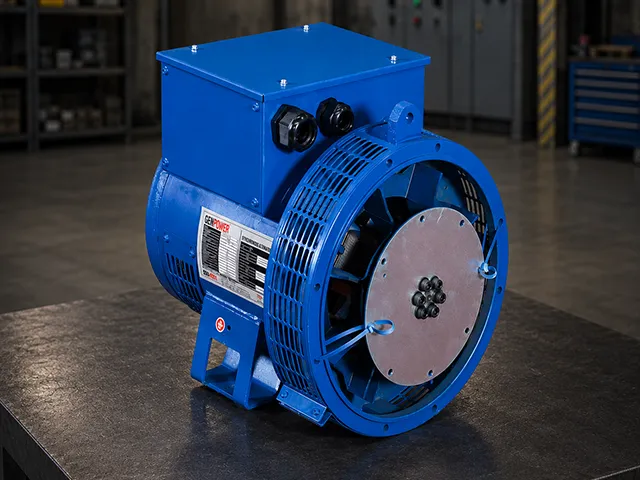
What is an alternator? An alternator is an electromechanical device that converts mechanical energy into alternating electrical current. In generator systems, it works with an engine, turbine or another prime mover to produce electrical power for connected equipment, buildings or industrial loads.
What is an alternator? It mainly consists of a rotor, stator, voltage regulator and related control components. As the rotor turns, it creates a magnetic field that moves across the stator windings and generates alternating current. The voltage regulator helps keep the electrical output within a stable range. Alternators are used in home standby generators, commercial power systems, industrial equipment, marine applications, construction sites and power plants. Their main function is to transform rotational movement into usable electrical energy wherever a reliable power source is required.
The purpose of an alternator is to convert mechanical energy into electrical energy. In generator systems, the engine or prime mover rotates the alternator shaft, allowing the unit to produce the electricity required for connected loads. This makes the alternator one of the main components responsible for turning fuel-powered motion into usable electrical output.
An alternator may supply electricity for different applications, including:
Inside the alternator, the rotor creates a rotating magnetic field. As this magnetic field moves across the stator windings, alternating current is produced through electromagnetic induction. The voltage regulator then helps control the output level so the connected equipment receives stable electrical power.
If an alternator does not work correctly, the generator may produce low voltage, unstable power, overheating, unusual noise or complete output failure. Since similar problems can also be caused by wiring, load imbalance, engine speed issues or regulator faults, the full generator system should be inspected before replacing the alternator.
The difference between an alternator and a generator primarily concerns their electrical output, internal design and common applications. A generator is a broad term for equipment that converts mechanical energy into electrical energy. An alternator is technically a type of generator designed to produce alternating current. In everyday usage, however, “generator” often refers to a standalone machine that powers buildings, tools or equipment during an outage.
An automotive alternator produces alternating current internally and uses a rectifier to deliver direct current to the battery and electrical system. Traditional direct-current generators use a commutator to produce a DC output. Standalone generator sets may generate AC power through an alternator driven by a petrol, diesel or gas engine. Therefore, the terms may overlap depending on the technical context.
The main practical differences can be summarised as follows:
For this reason, an alternator and a generator should not always be treated as completely separate devices. An alternator describes a particular electricity-generating design, whereas generator is the broader category.




 Linkedin
 Facebook
 Instagram
 Twitter